प्रकाशित
Ten Essential Facts About the Bald Eagle
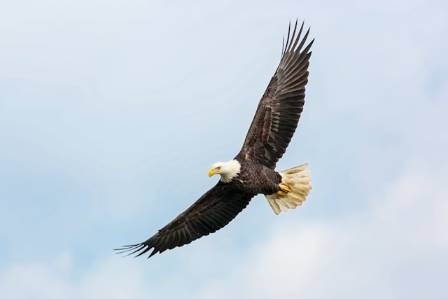
As a Guinness World Record holder and a symbol of national pride, the Bald Eagle is arguably the most famous bird in North America. These formidable predators are commonly found near large bodies of water, where they construct massive nests and dominate their ecosystems. While their image is synonymous with American identity, these raptors possess several unique and surprising characteristics that go beyond their patriotic reputation.
Austin Parker
लेखक
##
As a Guinness World Record holder and a symbol of national pride, the Bald Eagle is arguably the most famous bird in North America. These formidable predators are commonly found near large bodies of water, where they construct massive nests and dominate their ecosystems. While their image is synonymous with American identity, these raptors possess several unique and surprising characteristics that go beyond their patriotic reputation.
Debunking the Name and Appearance
Despite their common name, Bald Eagles are not actually hairless. The term "bald" is a remnant of the Middle English word "balde," which translated to "white-headed" rather than a lack of feathers. This is reflected in their scientific name, Haliaeetus leucocephalus, which literally means "white-headed sea eagle." Their iconic look—a snowy white head contrasting with a dark chocolate-brown body—only develops fully when the birds reach maturity at around five years of age.
Geographic Range and Habitat
The Bald Eagle is the only eagle species found exclusively in North America. Their territory spans from the wilderness of Canada to the northern reaches of Mexico. They have been recorded in 49 of the 50 United States, with Hawaii being the only exception. While many populations remain in their territories year-round, others are migratory, traveling between summer breeding grounds in the north and warmer wintering areas in the lower United States.
A Symbol of National Identity
In 1782, the Second Continental Congress selected the Bald Eagle as the national emblem. Since then, the bird has appeared on currency, military decorations, and official government seals. However, it wasn't until December 2024 that the species was formally designated as the official national bird by presidential decree.
Opportunistic Hunting and Scavenging
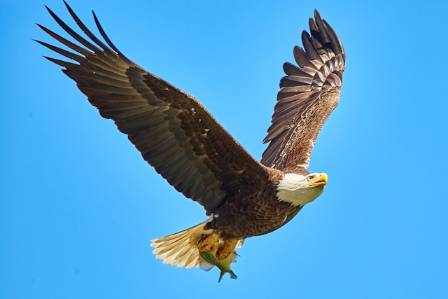
While they are viewed as majestic hunters, Bald Eagles are often opportunists. They frequently engage in kleptoparasitism, which involves hounding other birds like Ospreys until the smaller predator drops its catch, allowing the eagle to swoop in and steal it. Furthermore, they are not above scavenging for food at waste management facilities or sewage plants, proving they are highly adaptable survivors.
A Landmark Conservation Success
The mid-20th century was a dark period for the species; hunting and habitat destruction, combined with the use of the pesticide DDT, decimated their numbers. By 1976, only about 400 nesting pairs remained in the lower 48 states. Following the 1972 ban on DDT and the enactment of the Endangered Species Act in 1973, the population began a spectacular recovery. Today, with over 300,000 individuals in the U.S., their comeback is celebrated as a pinnacle of wildlife conservation.
Dramatic Courtship Rituals
Because Bald Eagles typically pair for life, their courtship is remarkably theatrical. To solidify their bond, pairs engage in an aerial "cartwheel display." The two birds soar to great heights, lock their talons together, and free-fall toward the earth in a spinning spiral, disengaging only at the last possible moment before hitting the ground.
Record-Breaking Nest Construction
Bald Eagles hold the record for building the largest nests of any bird species. These structures, fashioned from branches, grass, and moss, typically measure five to six feet across. The largest recorded nest, located in Florida, was a staggering 10 feet wide and 20 feet deep, weighing over two tons. In areas without suitable trees, these eagles have even been known to build their massive homes directly on the ground.
Unexpected Swimming Abilities
Though they are masters of the air, Bald Eagles are also capable swimmers. If an eagle catches a fish that is too heavy to lift out of the water, it will use its wings to perform a rhythmic "butterfly stroke," paddling through the water until it reaches the safety of the shoreline to consume its meal.
Longevity and Modern Threats
In the wild, these apex predators can live for a quarter-century, while those in captivity have reached age 50. Despite their removal from the endangered species list in 2007, they face ongoing human-related dangers. Common threats include lead poisoning from ammunition, vehicle strikes, and collisions with power lines or wind turbines. They remain protected under federal laws like the Migratory Bird Treaty Act.
Hollywood’s Hidden Voiceover
Perhaps the most surprising fact is that the majestic, piercing scream associated with Bald Eagles in movies is usually a fake. In reality, Bald Eagles have relatively thin, high-pitched chirping voices. To make them sound more intimidating on screen, sound editors almost always replace their natural calls with the deep, raspy shriek of a Red-tailed Hawk.
आपके लिए और खबरें

Unraveling the Charm: The Endearing Allure of Dogs and Cats
If your heart skips a beat at the sight of an exuberant puppy wagging its tail or a drowsy kitten stretching in a yawn, you're not alone. Humans have shared an enduring fascination with the irresistible cuteness of their furry companions for centuries. But what lies beneath this universal adoration? Why do we perceive cats as cute, and what is it about dogs that tugs at our heartstrings? Let's delve into the enchanting world of pet cuteness to unravel the mysteries behind our affection for these charming creatures.

Discover the Diversity: 6 Varieties of Daisies to Illuminate Your Garden
Daisies, an integral part of the vast Asteraceae family, comprise an astounding 10 percent of the world's flowering plants. While the Common Daisy and Gerbera Daisy often steal the spotlight, it's fascinating to note that there are over 20,000 distinct "daisy" species within this extensive plant family. The Asteraceae family boasts not only daisies but also includes members like sunflowers, chrysanthemums, and even lettuce.
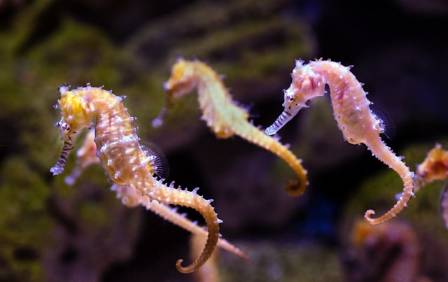
Intriguing Seahorse Insights for Children
Despite their unusual appearance, these creatures are classified as fish.

Simple Windmill Drawing: A Beginner's Guide to Illustrating Classic Structures
For hundreds of years, the distinctive silhouette of the windmill has captivated the imagination of artists. These iconic buildings are still a common sight in countries like Denmark, where they serve as a testament to both historical charm and engineering ingenuity. This lesson focuses on simplifying the complex appearance of a windmill into manageable shapes, allowing students to recreate the massive fan structure using basic geometric lines.

The 5 Best Lightweight Vacuums - Summer 2024
Thanks to advancements in design and materials, vacuum cleaners have become increasingly lightweight.

The Ultimate Guide to Selecting a Premium Women’s T-Shirt
A high-quality t-shirt is the cornerstone of a functional wardrobe. It should offer a balance of comfort, a flattering silhouette, and a commitment to longevity. Selecting the right piece involves looking beyond the surface to understand the materials, construction, and ethical standards behind the garment. This guide will help you identify a t-shirt that remains a favorite in your rotation for years to come.