प्रकाशित
Minar-e-Pakistan: A Monument Etched in the Soul of a Nation
Rising 70 meters above the bustling heart of Lahore, Minar-e-Pakistan stands not merely as a structure of brick and stone, but as a living testament to a people’s yearning for self-determination. More than a monument, it is a symbol carved from history—a marker of the moment when a dream of nationhood took concrete form, and a beacon that continues to define Pakistan’s identity decades after its independence. From its architectural fusion of past and present to its role in shaping national memory, Minar-e-Pakistan embodies the spirit of a nation’s struggle, triumph, and enduring pride.
Jasper
लेखक
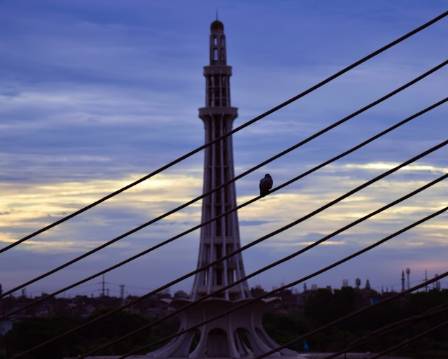
Rising 70 meters above the bustling heart of Lahore, Minar-e-Pakistan stands not merely as a structure of brick and stone, but as a living testament to a people’s yearning for self-determination. More than a monument, it is a symbol carved from history—a marker of the moment when a dream of nationhood took concrete form, and a beacon that continues to define Pakistan’s identity decades after its independence. From its architectural fusion of past and present to its role in shaping national memory, Minar-e-Pakistan embodies the spirit of a nation’s struggle, triumph, and enduring pride.
The Cradle of a Nation: Historical Roots
The story of Minar-e-Pakistan is inseparable from the story of Pakistan itself. Its foundations lie in a pivotal moment: March 23, 1940, when the All-India Muslim League gathered in Lahore’s Iqbal Park (then known as Minto Park) to pass the historic Lahore Resolution. Spearheaded by Muhammad Ali Jinnah, the resolution demanded a separate homeland for Muslims in British India, a bold vision born from decades of political struggle against colonial rule and communal tensions. Though the resolution did not explicitly name “Pakistan,” it laid the ideological groundwork for the creation of the world’s first Islamic republic seven years later, in 1947.
To honor this defining moment, plans for a monument at the very site of the resolution’s passage were initiated in the 1950s. Construction began in 1960, led by architect Nasreddin Murat-Khan, and was completed in 1968. Every inch of Minar-e-Pakistan was designed to echo this history: its base marks the exact spot where Jinnah and other leaders stood to deliver their speeches, and inscriptions on its walls immortalize key passages from the Lahore Resolution, ensuring that the words that birthed a nation remain etched in stone.
Architectural Poetry: A Fusion of Eras
Minar-e-Pakistan’s design is a masterclass in symbolic architecture, weaving together threads of Islamic, Mughal, and modern styles to tell a story of continuity and innovation. Its most striking feature is the towering central pillar, tapering gently as it rises to a pointed apex—a nod to the minarets of Islamic tradition, yet rendered in a sleek, contemporary form.
The monument’s base is equally deliberate: a five-pointed star, representing the five pillars of Islam, with each point leading to an arched gateway. These arches, adorned with intricate floral motifs and calligraphy, pay homage to Mughal craftsmanship, reminiscent of Lahore’s iconic Badshahi Mosque and Lahore Fort, which stand nearby. The transition from the star-shaped base to the cylindrical shaft symbolizes the journey from idea to nation—from the fragmented aspirations of a community to the unified identity of a sovereign state.
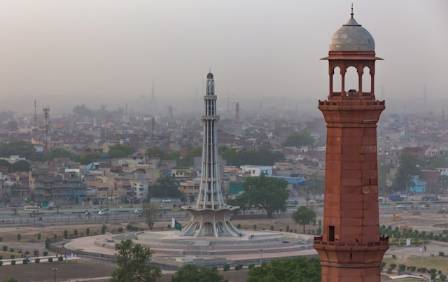
At 70 meters (230 feet), the minar offers more than height; it offers perspective. Balconies at various levels invite visitors to climb and gaze out over Lahore—a city that has witnessed millennia of history, from Mughal grandeur to colonial rule, and now thrives as a modern metropolis. From this vantage, the monument connects the past and present: below lies the park where the resolution was passed; in the distance, the domes of Badshahi Mosque and the ramparts of Lahore Fort stand as reminders of the region’s rich cultural legacy.
A Living Symbol: Nationhood in Stone
Minar-e-Pakistan’s significance extends far beyond its historical roots. It has become the very face of Pakistan’s national identity, embedded in the fabric of daily life. Its image adorns currency notes, postage stamps, and official documents, serving as a constant reminder of the sacrifices that forged the nation. For generations of Pakistanis, it is more than a landmark—it is a touchstone of pride, a place where schoolchildren learn about their heritage, and where citizens gather to reaffirm their unity.
Beneath the minar, a museum preserves this legacy. Its exhibits include rare photographs of the 1940 gathering, handwritten letters from leaders of the Pakistan Movement, and artifacts from the struggle for independence, offering visitors a tangible link to the past. Here, history is not just told—it is felt: the weight of colonial oppression, the hope in Jinnah’s speeches, the joy of independence in 1947.
Heart of Celebration: Rituals and Remembrance
Each year, Minar-e-Pakistan transforms into the epicenter of Pakistan’s Independence Day celebrations on August 14. The monument is bathed in green and white lights—the colors of the national flag—and throngs of people gather to witness the flag-raising ceremony, listen to speeches, and sing patriotic songs. It is a day when the nation’s collective memory converges: elders recount stories of partition, youth pledge to uphold the ideals of independence, and the air hums with pride.
Beyond formal ceremonies, the surrounding Iqbal Park ensures the monument remains a living space. Families picnic on its lawns, children play amid the greenery, and locals stroll beneath the minar’s shadow. This blend of reverence and everyday life is deliberate: Minar-e-Pakistan is not a static relic, but a part of the community, a place where history and modernity coexist.
A Magnet for the World: Tourism and Legacy
As one of Lahore’s most iconic landmarks, Minar-e-Pakistan draws visitors from across Pakistan and beyond. Tourists come to trace the steps of the independence leaders, explore the museum, and capture the monument’s grandeur against Lahore’s skyline. For many, it is a gateway to understanding Pakistan’s complex history—a story of struggle, identity, and resilience.
Its proximity to other historical sites, including Badshahi Mosque (one of the largest mosques in the world) and Lahore Fort (a UNESCO World Heritage Site), makes it part of a cultural corridor that showcases the region’s layered past. Together, these landmarks tell a story of Lahore as a crossroads of civilizations—and Minar-e-Pakistan adds the crucial chapter of nationhood.
In the end, Minar-e-Pakistan’s true significance lies not in its height or design, but in what it represents: a people’s refusal to be defined by others, their courage to dream of a homeland, and their commitment to preserving that dream for future generations. It is more than a monument. It is Pakistan’s soul, standing tall.
आपके लिए और खबरें
Ten Essential Facts About the Bald Eagle
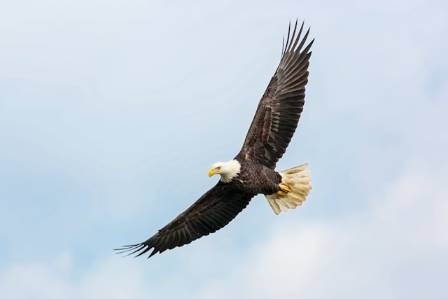
As a Guinness World Record holder and a symbol of national pride, the Bald Eagle is arguably the most famous bird in North America. These formidable predators are commonly found near large bodies of water, where they construct massive nests and dominate their ecosystems. While their image is synonymous with American identity, these raptors possess several unique and surprising characteristics that go beyond their patriotic reputation.

Unraveling the Charm: The Endearing Allure of Dogs and Cats
If your heart skips a beat at the sight of an exuberant puppy wagging its tail or a drowsy kitten stretching in a yawn, you're not alone. Humans have shared an enduring fascination with the irresistible cuteness of their furry companions for centuries. But what lies beneath this universal adoration? Why do we perceive cats as cute, and what is it about dogs that tugs at our heartstrings? Let's delve into the enchanting world of pet cuteness to unravel the mysteries behind our affection for these charming creatures.

Discover the Diversity: 6 Varieties of Daisies to Illuminate Your Garden
Daisies, an integral part of the vast Asteraceae family, comprise an astounding 10 percent of the world's flowering plants. While the Common Daisy and Gerbera Daisy often steal the spotlight, it's fascinating to note that there are over 20,000 distinct "daisy" species within this extensive plant family. The Asteraceae family boasts not only daisies but also includes members like sunflowers, chrysanthemums, and even lettuce.
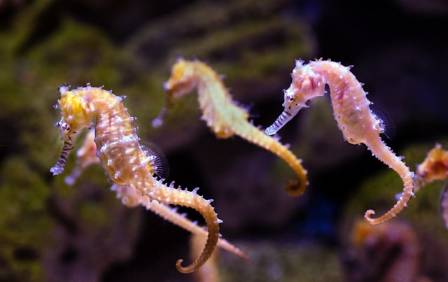
Intriguing Seahorse Insights for Children
Despite their unusual appearance, these creatures are classified as fish.
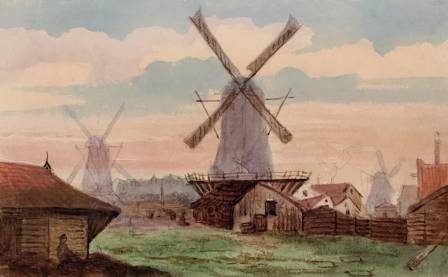
Simple Windmill Drawing: A Beginner's Guide to Illustrating Classic Structures
For hundreds of years, the distinctive silhouette of the windmill has captivated the imagination of artists. These iconic buildings are still a common sight in countries like Denmark, where they serve as a testament to both historical charm and engineering ingenuity. This lesson focuses on simplifying the complex appearance of a windmill into manageable shapes, allowing students to recreate the massive fan structure using basic geometric lines.

The 5 Best Lightweight Vacuums - Summer 2024
Thanks to advancements in design and materials, vacuum cleaners have become increasingly lightweight.