प्रकाशित
A Journey Through the History of Space Exploration
The fascinating history of human space travel unfolds, revealing our quest to reach the stars.
Caleb Archer
लेखक
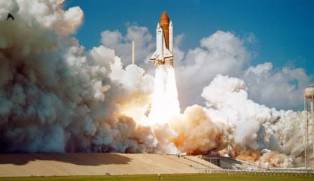
The fascinating history of human space travel unfolds, revealing our quest to reach the stars.
The inaugural traveler to orbit our planet was an unlikely astronaut – Laika, a two-year-old terrier mutt plucked from Moscow's streets just over a week before her historic mission in 1957. This marked a pivotal moment in space exploration when the potential perils of spaceflight remained a mystery, and scientists questioned its impact on living organisms.
Exploration is an inherent part of human nature. Since time immemorial, the call to venture beyond the familiar has led us over the horizon in search of sustenance, territory, profit, or simply to uncover the mysteries that lie beyond the confines of forests, mountains, and oceans. In the past century, our innate drive to explore has reached new altitudes, fundamentally altering our understanding of the world. The advent of airplanes revolutionized travel, bridging distances, simplifying journeys, and offering a novel perspective of Earth. By the mid-20th century, humanity set its sights on an even more audacious goal – to conquer the cosmos.
The genesis of our cosmic odyssey can be traced back to the fierce competition between two global superpowers, the United States and the former Soviet Union. These rivals engaged in a high-stakes race for supremacy, where space exploration became a symbol of their power struggle. Laika's orbit was followed four years later by the historic journey of Soviet Cosmonaut Yuri A. Gagarin, the first human to venture into space. With Earth's orbit conquered, our aspirations turned to the moon, and in 1969, the United States achieved this momentous feat by landing two astronauts on the lunar surface, an accomplishment followed by five more manned missions. Concurrently, NASA, the United States' National Aeronautics and Space Administration, dispatched spacecraft to investigate the mysteries of our solar system. This era witnessed the emergence of glittering manned space stations that adorned the skies. NASA also introduced reusable spacecraft, the space shuttle orbiters, revolutionizing space travel. These orbiters transported astronauts and satellites into space, covering vast distances with incredible speed. It is worth noting that Yuri Gagarin's return to Earth involved a parachute, whereas the space shuttle gracefully glided to a runway after leaving orbit, all without utilizing an engine.
However, space travel remains a far cry from the cinematic portrayals. Journeying from one point in space to another involves intricate calculations, meticulously accounting for the nuances of inertia and gravity – a science aptly described as "rocket science." This entails skillfully exploiting the gravitational forces of celestial bodies to propel spacecraft across the solar system. The Voyager mission of the 1970s harnessed a unique alignment of Jupiter, Saturn, Uranus, and Neptune, shaving off nearly two decades of travel time. Moreover, space exploration is fraught with peril. Tragically, more than 20 astronauts have lost their lives in the line of duty.
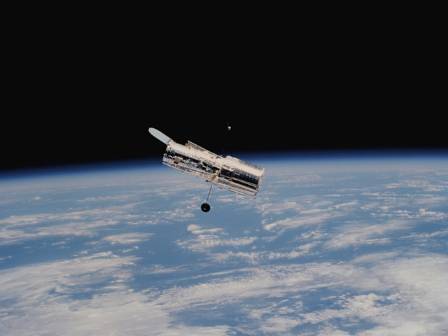
Nevertheless, this peril has not deterred individuals from signing up for space missions. While NASA's shuttle program may have reached its conclusion, private enterprises are gearing up for their forays into the cosmos. One such venture, Planetary Resources, has ambitious plans to send robotic astronauts to the Asteroid Belt, where they will extract precious metals. SpaceX, another pioneering company, aspires to land civilian astronauts on Mars, marking the next giant leap for humanity into our solar system, with this mission slated for the next two decades. Notably, NASA and other civilian organizations are also charting their own paths to Mars. Who knows, you might even be part of one of these groundbreaking missions? Just don't forget to bring your loyal canine companion along for the celestial ride.
आपके लिए और खबरें
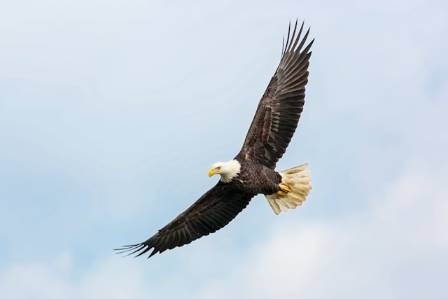
Ten Essential Facts About the Bald Eagle
As a Guinness World Record holder and a symbol of national pride, the Bald Eagle is arguably the most famous bird in North America. These formidable predators are commonly found near large bodies of water, where they construct massive nests and dominate their ecosystems. While their image is synonymous with American identity, these raptors possess several unique and surprising characteristics that go beyond their patriotic reputation.

Unraveling the Charm: The Endearing Allure of Dogs and Cats
If your heart skips a beat at the sight of an exuberant puppy wagging its tail or a drowsy kitten stretching in a yawn, you're not alone. Humans have shared an enduring fascination with the irresistible cuteness of their furry companions for centuries. But what lies beneath this universal adoration? Why do we perceive cats as cute, and what is it about dogs that tugs at our heartstrings? Let's delve into the enchanting world of pet cuteness to unravel the mysteries behind our affection for these charming creatures.

Discover the Diversity: 6 Varieties of Daisies to Illuminate Your Garden
Daisies, an integral part of the vast Asteraceae family, comprise an astounding 10 percent of the world's flowering plants. While the Common Daisy and Gerbera Daisy often steal the spotlight, it's fascinating to note that there are over 20,000 distinct "daisy" species within this extensive plant family. The Asteraceae family boasts not only daisies but also includes members like sunflowers, chrysanthemums, and even lettuce.
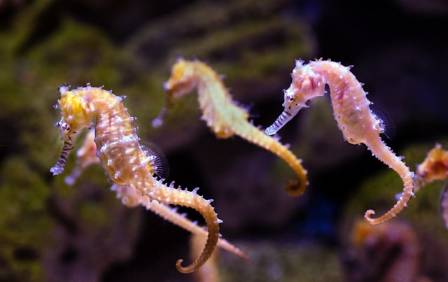
Intriguing Seahorse Insights for Children
Despite their unusual appearance, these creatures are classified as fish.
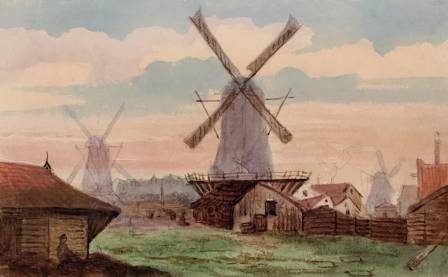
Simple Windmill Drawing: A Beginner's Guide to Illustrating Classic Structures
For hundreds of years, the distinctive silhouette of the windmill has captivated the imagination of artists. These iconic buildings are still a common sight in countries like Denmark, where they serve as a testament to both historical charm and engineering ingenuity. This lesson focuses on simplifying the complex appearance of a windmill into manageable shapes, allowing students to recreate the massive fan structure using basic geometric lines.

The 5 Best Lightweight Vacuums - Summer 2024
Thanks to advancements in design and materials, vacuum cleaners have become increasingly lightweight.