प्रकाशित
Remarkable and Little-Known Facts About Donkeys
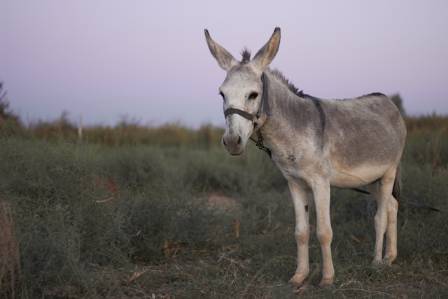
Donkeys are inquisitive animals that develop profound emotional connections with their environment and their peers. While often misunderstood, these creatures possess complex personalities and a range of unique traits that set them apart from other equines. To better appreciate these incredible beings, consider the following insights into their biology, intelligence, and social lives.
Lily Charlotte Ward
लेखक
##
Donkeys are inquisitive animals that develop profound emotional connections with their environment and their peers. While often misunderstood, these creatures possess complex personalities and a range of unique traits that set them apart from other equines. To better appreciate these incredible beings, consider the following insights into their biology, intelligence, and social lives.
Cognitive Abilities and Survival Adaptations
Research indicates that donkeys possess impressive spatial memory. They are capable of identifying the location of an object and remembering its position even after it is no longer within their line of sight. This suggests an understanding of "object permanence," a cognitive milestone demonstrating that they know something exists even when they cannot see it.
Furthermore, don't let their diet fool you. Having evolved in arid desert regions, donkeys are masters of efficiency. They can extract up to 95% of their required nutrients from fibrous plants that other animals find inedible or indigestible. Their specialized digestive tracts allow them to thrive on minimal resources, which means that in managed environments, their diet must be carefully monitored to prevent them from becoming overweight on lush pastures.
A Wide Spectrum of Physical Sizes
The diversity in donkey breeds is staggering. On one end of the scale are the "mammoth" donkeys. The largest on record, a donkey named Romulus, stood at an incredible 68 inches (approximately 173 cm) at the shoulder. Conversely, miniature donkeys are far smaller, typically reaching heights of only 36 inches (91 cm). The record for the smallest is held by a donkey named Kneehi, who measured just under 26 inches (66 cm) tall. Despite these vast differences in size, they all share the same fundamental donkey characteristics.
Intelligence and Self-Preservation
The common trope of the "stubborn" donkey is actually a misunderstanding of their high intelligence. Donkeys have a powerful instinct for self-preservation. When a donkey refuses to move, it is usually because it has analyzed the situation and determined that the path ahead might be dangerous or uncertain. Unlike animals that react impulsively, donkeys are thinkers; they prefer to evaluate all available information before making a choice that ensures their safety.
This cautious nature is linked to their evolutionary history. While horses evolved in large herds and typically rely on "flight" to escape danger, donkeys evolved in smaller groups in rugged terrain where running away was often ineffective. Consequently, a donkey is more likely to stand its ground and "fight" or assess a threat rather than bolt in a panic.
##
Emotional Bonds and Social Recognition
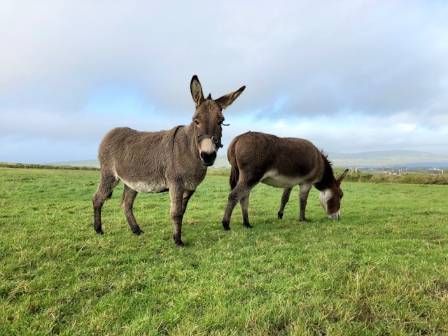
Donkeys are deeply social creatures that form lifelong friendships. These bonds are so intense that a "bonded pair" can suffer from acute, life-threatening stress if they are separated. Studies have confirmed that donkeys can distinguish between a close companion, a familiar acquaintance from their social group, and a total stranger. When given the choice, they consistently prefer the company of their specific bonded friend.
Sophisticated Sensory Organs and Communication
A donkey’s iconic large ears serve a dual purpose. Beyond hearing, they act as a cooling system; because blood vessels are located very close to the thin skin of the ears, heat can be released efficiently to regulate body temperature. Their hearing is so sensitive that they can detect the call of another donkey from several miles away. Their external ears are also mobile, allowing them to pinpoint and amplify specific sounds by directing their ears toward the source.
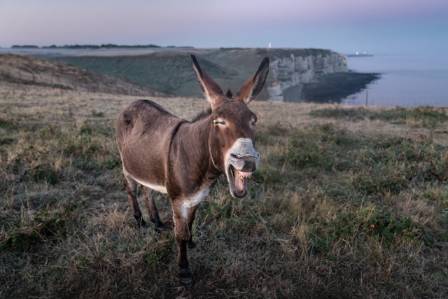
Communication among donkeys is equally diverse. While the loud, rhythmic "bray" is their most famous vocalization—unique to each individual and designed to travel long distances—they also utilize a variety of other sounds. Donkeys express themselves through a repertoire of growls, squeals, grunts, and soft "whuffles," allowing them to convey a wide range of emotions and information to their herd.
आपके लिए और खबरें

Ten Essential Facts About the Bald Eagle
As a Guinness World Record holder and a symbol of national pride, the Bald Eagle is arguably the most famous bird in North America. These formidable predators are commonly found near large bodies of water, where they construct massive nests and dominate their ecosystems. While their image is synonymous with American identity, these raptors possess several unique and surprising characteristics that go beyond their patriotic reputation.

Unraveling the Charm: The Endearing Allure of Dogs and Cats
If your heart skips a beat at the sight of an exuberant puppy wagging its tail or a drowsy kitten stretching in a yawn, you're not alone. Humans have shared an enduring fascination with the irresistible cuteness of their furry companions for centuries. But what lies beneath this universal adoration? Why do we perceive cats as cute, and what is it about dogs that tugs at our heartstrings? Let's delve into the enchanting world of pet cuteness to unravel the mysteries behind our affection for these charming creatures.

Discover the Diversity: 6 Varieties of Daisies to Illuminate Your Garden
Daisies, an integral part of the vast Asteraceae family, comprise an astounding 10 percent of the world's flowering plants. While the Common Daisy and Gerbera Daisy often steal the spotlight, it's fascinating to note that there are over 20,000 distinct "daisy" species within this extensive plant family. The Asteraceae family boasts not only daisies but also includes members like sunflowers, chrysanthemums, and even lettuce.

Intriguing Seahorse Insights for Children
Despite their unusual appearance, these creatures are classified as fish.

Simple Windmill Drawing: A Beginner's Guide to Illustrating Classic Structures
For hundreds of years, the distinctive silhouette of the windmill has captivated the imagination of artists. These iconic buildings are still a common sight in countries like Denmark, where they serve as a testament to both historical charm and engineering ingenuity. This lesson focuses on simplifying the complex appearance of a windmill into manageable shapes, allowing students to recreate the massive fan structure using basic geometric lines.

The 5 Best Lightweight Vacuums - Summer 2024
Thanks to advancements in design and materials, vacuum cleaners have become increasingly lightweight.