प्रकाशित
Landscape Artistry: Capturing Trees and Rolling Hills
Creating a rural scene featuring lush greenery and undulating terrain is a rewarding challenge for any artist. This guide details the process of constructing such a landscape, focusing on depth and light. While this demonstration was executed using oil paints, the techniques remain equally effective for those working with acrylics.
Benjamin Caldwell
लेखक
##
Creating a rural scene featuring lush greenery and undulating terrain is a rewarding challenge for any artist. This guide details the process of constructing such a landscape, focusing on depth and light. While this demonstration was executed using oil paints, the techniques remain equally effective for those working with acrylics.
Composition and Color Strategy
The structure of this piece relies on a "group mass" arrangement, where a cluster of trees serves as the primary focal point. To maintain a natural and engaging look, the trees vary in both height and silhouette. It is crucial to position these central elements away from the middle of the frame; a centered focal point often creates a stagnant, uninteresting image.
Achieving a realistic palette requires a specific set of pigments. The foundation of this work uses Titanium White, Burnt Sienna, Yellow Oxide, Cadmium Yellow, Cadmium Red, and Quinacridone Crimson. For the cooler tones and greens, Ultramarine Blue and Phthalo Green are essential.
The toolkit for this project ranges from large No. 10 flat brushes for broad strokes to incredibly fine No. 00 round brushes for intricate details. Dagger brushes (3/8" and 1/4") are particularly valuable in this process, as their unique shape allows for a variety of marks that mimic the complex texture of foliage and pine needles.
The Foundation: Toning and Blocking-In
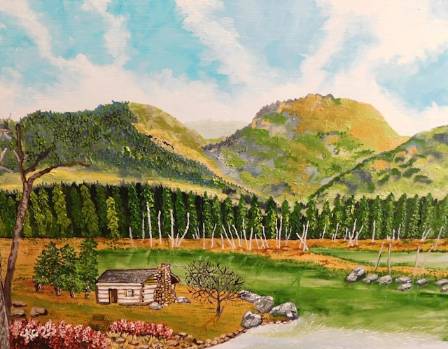
The process begins on a Belgian linen surface, pre-toned with a thin layer of Burnt Sienna. This warm base provides an underlying vibrancy that peeks through subsequent layers. Using a round brush and a medium to accelerate drying, the initial layout is sketched to establish the placement of hills and groves.
The first major painting phase is the "block-in," where shadows and dark values are established. This step is vital for creating atmospheric perspective—the illusion of depth where distant objects appear lighter and less saturated. Starting with the clouds, a muted violet-blue is mixed using Ultramarine Blue, Burnt Sienna, and Quinacridone Crimson. This same mixture, with less white, is applied to the shadows of distant hills.
As the work moves toward the foreground, the shadows become deeper and more intense. The darkest points are found within the base of the nearest trees. By setting these dark anchors early, it becomes much simpler to judge the correct brightness of the sunlit areas later.
Developing Landscapes and Greenery
The rolling hills in the background require desaturated, low-chroma greens to ensure they appear far away. To achieve this, mix Ultramarine Blue with Yellow Oxide and a hint of red to neutralize the vibrancy. In contrast, the foreground pine trees demand more saturation and darker values. These are created by blending Ultramarine Blue with Yellow Oxide, then heightening the color with Cadmium Yellow and Cadmium Orange.
When painting the grass, remember that it is generally much lighter in value than the trees. A mixture of Cadmium Yellow, Ultramarine Blue, and a touch of Phthalo Green works well for the bright meadow areas. Once the entire surface is covered, the goal is to ensure the tonal balance and depth are working harmoniously before allowing the piece to dry.
Modelling, Refinement, and Final Details
After the initial layers have set, the focus shifts to adding texture and form. This "modelling" stage involves using smaller brushes to build up the appearance of individual leaves and needles. Dagger brushes are used here to suggest the organic density of the foliage without overcomplicating the shapes.
When it comes to the grass and fine details, a "less is more" philosophy is most effective. Instead of painting every blade of grass, suggest the texture through varied brushwork. This allows the viewer's mind to fill in the gaps, resulting in a more fluid and lifelike image. Over-detailing can often result in a rigid, lifeless painting.
The final touches involve adding the most delicate features, such as the skeletal network of branches and twigs nestled within the greenery. The very lightest values—the highlights where the sun catches the tips of the pine needles—are saved for the very end. Using No. 0 and 00 round brushes, these bright accents are applied sparingly to provide the final spark of life to the countryside scene.
आपके लिए और खबरें

Ten Essential Facts About the Bald Eagle
As a Guinness World Record holder and a symbol of national pride, the Bald Eagle is arguably the most famous bird in North America. These formidable predators are commonly found near large bodies of water, where they construct massive nests and dominate their ecosystems. While their image is synonymous with American identity, these raptors possess several unique and surprising characteristics that go beyond their patriotic reputation.

Unraveling the Charm: The Endearing Allure of Dogs and Cats
If your heart skips a beat at the sight of an exuberant puppy wagging its tail or a drowsy kitten stretching in a yawn, you're not alone. Humans have shared an enduring fascination with the irresistible cuteness of their furry companions for centuries. But what lies beneath this universal adoration? Why do we perceive cats as cute, and what is it about dogs that tugs at our heartstrings? Let's delve into the enchanting world of pet cuteness to unravel the mysteries behind our affection for these charming creatures.

Discover the Diversity: 6 Varieties of Daisies to Illuminate Your Garden
Daisies, an integral part of the vast Asteraceae family, comprise an astounding 10 percent of the world's flowering plants. While the Common Daisy and Gerbera Daisy often steal the spotlight, it's fascinating to note that there are over 20,000 distinct "daisy" species within this extensive plant family. The Asteraceae family boasts not only daisies but also includes members like sunflowers, chrysanthemums, and even lettuce.
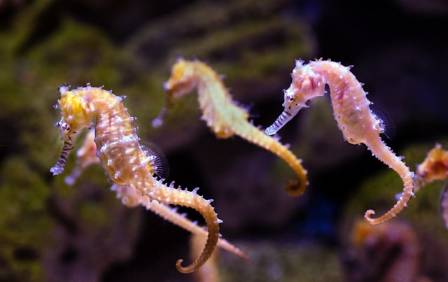
Intriguing Seahorse Insights for Children
Despite their unusual appearance, these creatures are classified as fish.
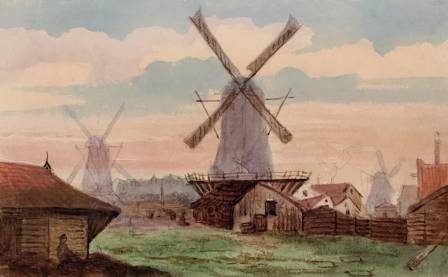
Simple Windmill Drawing: A Beginner's Guide to Illustrating Classic Structures
For hundreds of years, the distinctive silhouette of the windmill has captivated the imagination of artists. These iconic buildings are still a common sight in countries like Denmark, where they serve as a testament to both historical charm and engineering ingenuity. This lesson focuses on simplifying the complex appearance of a windmill into manageable shapes, allowing students to recreate the massive fan structure using basic geometric lines.

The 5 Best Lightweight Vacuums - Summer 2024
Thanks to advancements in design and materials, vacuum cleaners have become increasingly lightweight.