प्रकाशित
Five Spectacular Planetary Nebulae
A Guide to Observing the Hourglass, Smoke Ring, and Cosmic Snowball.What exactly are planetary nebulae, and how can amateur astronomers spot them?
Mia White
लेखक
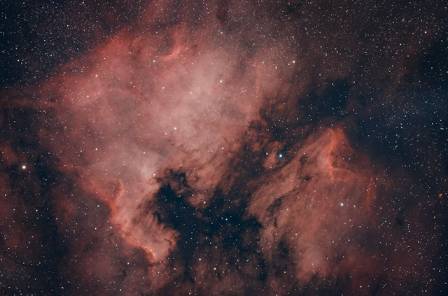
A Guide to Observing the Hourglass, Smoke Ring, and Cosmic Snowball
What exactly are planetary nebulae, and how can amateur astronomers spot them?
Join us as we explore five of the most captivating examples visible through amateur telescopes.
It’s not uncommon to hear someone remark, “Hmm, a nebula,” upon peering through a telescope for the first time—often with a hint of disappointment. The initial reaction usually stems from not fully understanding what’s being observed. Context matters: knowing what lies behind that faint smudge of light can transform a casual glance into a moment of wonder.
In this guide, we’ll introduce five fascinating planetary nebulae and offer practical tips for locating them. But first—what are these enigmatic objects?
Understanding Planetary Nebulae
Planetary nebulae are deep-sky objects located far beyond our solar system, often thousands of light-years away. They represent the final stages of sun-like stars. Much like living beings, stars undergo birth, evolution, and eventual decline—though on timescales spanning millions or even billions of years.
When a star with up to 1.5 times the mass of our Sun exhausts the hydrogen fuel in its core, it expands into a red giant. Eventually, the outer layers are ejected into space, while the core collapses into a dense, hot white dwarf. The expelled material—composed of hydrogen, helium, and oxygen—forms a glowing shell illuminated by intense ultraviolet radiation from the central star. This shell is what we see as a planetary nebula.
The name dates back to the 18th century, when William Herschel observed these hazy, planet-like disks through early telescopes and likened them to gas giants. Though we now know they are unrelated to planets, the poetic name has endured.
These nebulae vary widely in age. Younger ones, around 2,000 years old, appear small and bright. Older nebulae, up to 10,000 years old, become faint and diffuse as they expand into space, eventually fading from view.
Observing Tips
While many nebulae require dark skies, some planetary nebulae are bright and compact enough to be seen from suburban locations. They come in diverse shapes: rings, disks, hourglasses, and irregular forms. Using an OIII filter (which highlights doubly ionized oxygen) can enhance the view of larger nebulae, especially with telescopes 8 inches or wider. For smaller, brighter nebulae, higher magnification often works best.
Many planetary nebulae emit strongly in the green part of the spectrum (495–500 nm), which our eyes are particularly sensitive to—hence their often greenish tint.
M27: The Dumbbell Nebula
One of the brightest planetary nebulae, M27 lies in the constellation Vulpecula. Discovered by Charles Messier in 1764, it resembles a cosmic hourglass. Through a telescope, its greenish glow and faint central star (visible in larger instruments) stand out. The nebula spans about 3 light-years and is roughly 9,000 years old.
To locate it, find the arrow-shaped constellation Sagitta. From the tip, move about one degree toward Cygnus. Look for a small arc of three 6th-magnitude stars—M27 lies nearby.
Observation tip: Use averted vision or an OIII filter to make the nebula “pop” into view.
M57: The Ring Nebula
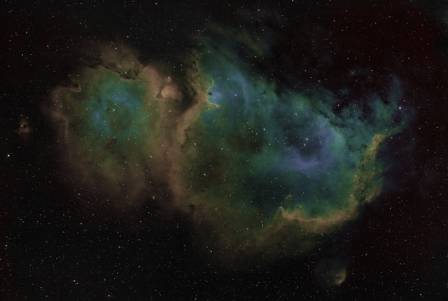
A classic summer target in Lyra, the Ring Nebula is a smoke-ring-like structure formed by a dying star. It’s visible even in small telescopes at 100x magnification. The ring is slightly oval and grows by one arcsecond per century.
Find Lyra’s parallelogram of stars. M57 lies midway between Beta and Gamma Lyrae.
NGC 7662: The Blue Snowball
Located in Andromeda, this mag 8.3 nebula appears as a vivid blue-green disk. Its intense OIII emission and high surface brightness make it an ideal target for urban observers. Despite its name, the central star is not visible in amateur telescopes.
To find it, look halfway between Alpha Andromedae and Cepheus. From Iota Andromedae, shift two degrees west.
NGC 6826: The Blinking Planetary
This nebula in Cygnus exhibits a unique “blinking” effect due to the physiology of human vision: when you look directly, only the central star is visible; with averted vision, the nebula appears. It’s a fun challenge for small telescopes.
Locate Theta Cygni in the Swan’s wing. Move one degree toward a 6th-magnitude star, then 24 arcminutes further.
M76: The Little Dumbbell
Also known as the Barbell or Cork Nebula, M76 is the faintest planetary nebula in the Messier catalog. It lies in Perseus and shows a distinct two-lobed structure in moderate-sized telescopes. An OIII filter helps reveal faint extensions.
Find it midway between Cassiopeia and Andromeda, near the stars Upsilon Andromedae and Phi Persei.
Final Thoughts
Each of these nebulae offers a unique glimpse into the life cycle of stars. Whether you’re tracing the delicate ring of M57 or “blinking” at NGC 6826, you’re participating in a centuries-old tradition of cosmic observation. So on your next clear night, point your telescope toward one of these stellar remnants—and see the universe in a new light.
आपके लिए और खबरें

Ten Essential Facts About the Bald Eagle
As a Guinness World Record holder and a symbol of national pride, the Bald Eagle is arguably the most famous bird in North America. These formidable predators are commonly found near large bodies of water, where they construct massive nests and dominate their ecosystems. While their image is synonymous with American identity, these raptors possess several unique and surprising characteristics that go beyond their patriotic reputation.

Unraveling the Charm: The Endearing Allure of Dogs and Cats
If your heart skips a beat at the sight of an exuberant puppy wagging its tail or a drowsy kitten stretching in a yawn, you're not alone. Humans have shared an enduring fascination with the irresistible cuteness of their furry companions for centuries. But what lies beneath this universal adoration? Why do we perceive cats as cute, and what is it about dogs that tugs at our heartstrings? Let's delve into the enchanting world of pet cuteness to unravel the mysteries behind our affection for these charming creatures.

Discover the Diversity: 6 Varieties of Daisies to Illuminate Your Garden
Daisies, an integral part of the vast Asteraceae family, comprise an astounding 10 percent of the world's flowering plants. While the Common Daisy and Gerbera Daisy often steal the spotlight, it's fascinating to note that there are over 20,000 distinct "daisy" species within this extensive plant family. The Asteraceae family boasts not only daisies but also includes members like sunflowers, chrysanthemums, and even lettuce.

Intriguing Seahorse Insights for Children
Despite their unusual appearance, these creatures are classified as fish.

Simple Windmill Drawing: A Beginner's Guide to Illustrating Classic Structures
For hundreds of years, the distinctive silhouette of the windmill has captivated the imagination of artists. These iconic buildings are still a common sight in countries like Denmark, where they serve as a testament to both historical charm and engineering ingenuity. This lesson focuses on simplifying the complex appearance of a windmill into manageable shapes, allowing students to recreate the massive fan structure using basic geometric lines.

The 5 Best Lightweight Vacuums - Summer 2024
Thanks to advancements in design and materials, vacuum cleaners have become increasingly lightweight.