प्रकाशित
The Most Sailing Essentials: A Quick Start Guide to Common Terms
If you’re curious about sailing, the first hurdle isn’t the wind—it’s the language. This bite-sized primer collects the essential terms you’ll hear aboard, from the direction of travel to the parts of the boat. Master these, and you’ll communicate clearly with your crew and set off on your voyage with confidence.
David Martinez
लेखक

Introduction
If you’re curious about sailing, the first hurdle isn’t the wind—it’s the language. This bite-sized primer collects the essential terms you’ll hear aboard, from the direction of travel to the parts of the boat. Master these, and you’ll communicate clearly with your crew and set off on your voyage with confidence.
Direction and Position Fundamentals
Aft means toward the stern or rear of the boat, while ahead or forward signals movement toward the bow, the front of the vessel. Astern is the opposite of ahead, indicating movement toward the back. Leeward and windward describe directions relative to the wind: leeward is away from the wind, while windward faces the wind.
The Boat’s Core Components
The hull is the boat’s main body, providing structure and buoyancy. The keel is the fin beneath the hull that helps balance the vessel in water. The rudder is the steering surface that directs the boat’s course. The mainsail is the large triangular sail attached to the boom, which runs along the bottom edge of the sail.
Sails and Rigging Essentials
The jib is the forward sail located ahead of the mast and typically without a boom. The mainsail and jib work together to harness the wind. The boom is the horizontal bar at the bottom of the mainsail, helping control its angle and shape.
Making Maneuvers: Tacking and Jibing

Tacking and jibing are the two basic ways to turn the boat relative to the wind. Tacking means turning the bow through the wind, shifting wind to the other side. Jibing (or gybing) is the opposite: turning the stern (rear) through the wind so the wind moves from one side to the other.
Everyday Nautical Terms
A nautical mile is a unit used at sea—one minute of latitude, roughly 6,076 feet. A square knot (reef knot) is a common way to join two lines of similar size. The term “port” refers to the left side of the boat when facing forward, and “starboard” refers to the right side. The stern is the back of the boat, the bow is the front, and “dead in the water” describes a vessel with no wind in its sails, unable to move.
Everyday Sayings to Know
Sailors use colorful phrases that still echo today. Phrases like “loose end,” “know the ropes,” “batten down the hatches,” and “get underway” capture practical actions and readiness for weather, maintenance, and journeys at sea.
Conclusion

With these basics, you’re on your way to speaking like a sailor and enjoying a safer, more enjoyable voyage. Practice these terms, join a sailing program, and soon you’ll be ready to set sail with confidence and a voice that matches the sea. Here’s to smooth currents and happy boating.
आपके लिए और खबरें
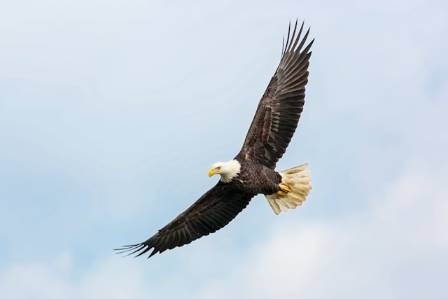
Ten Essential Facts About the Bald Eagle
As a Guinness World Record holder and a symbol of national pride, the Bald Eagle is arguably the most famous bird in North America. These formidable predators are commonly found near large bodies of water, where they construct massive nests and dominate their ecosystems. While their image is synonymous with American identity, these raptors possess several unique and surprising characteristics that go beyond their patriotic reputation.

Unraveling the Charm: The Endearing Allure of Dogs and Cats
If your heart skips a beat at the sight of an exuberant puppy wagging its tail or a drowsy kitten stretching in a yawn, you're not alone. Humans have shared an enduring fascination with the irresistible cuteness of their furry companions for centuries. But what lies beneath this universal adoration? Why do we perceive cats as cute, and what is it about dogs that tugs at our heartstrings? Let's delve into the enchanting world of pet cuteness to unravel the mysteries behind our affection for these charming creatures.

Discover the Diversity: 6 Varieties of Daisies to Illuminate Your Garden
Daisies, an integral part of the vast Asteraceae family, comprise an astounding 10 percent of the world's flowering plants. While the Common Daisy and Gerbera Daisy often steal the spotlight, it's fascinating to note that there are over 20,000 distinct "daisy" species within this extensive plant family. The Asteraceae family boasts not only daisies but also includes members like sunflowers, chrysanthemums, and even lettuce.
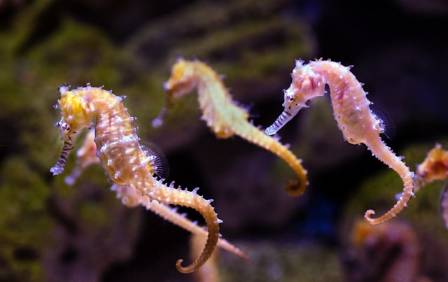
Intriguing Seahorse Insights for Children
Despite their unusual appearance, these creatures are classified as fish.

Simple Windmill Drawing: A Beginner's Guide to Illustrating Classic Structures
For hundreds of years, the distinctive silhouette of the windmill has captivated the imagination of artists. These iconic buildings are still a common sight in countries like Denmark, where they serve as a testament to both historical charm and engineering ingenuity. This lesson focuses on simplifying the complex appearance of a windmill into manageable shapes, allowing students to recreate the massive fan structure using basic geometric lines.

The 5 Best Lightweight Vacuums - Summer 2024
Thanks to advancements in design and materials, vacuum cleaners have become increasingly lightweight.